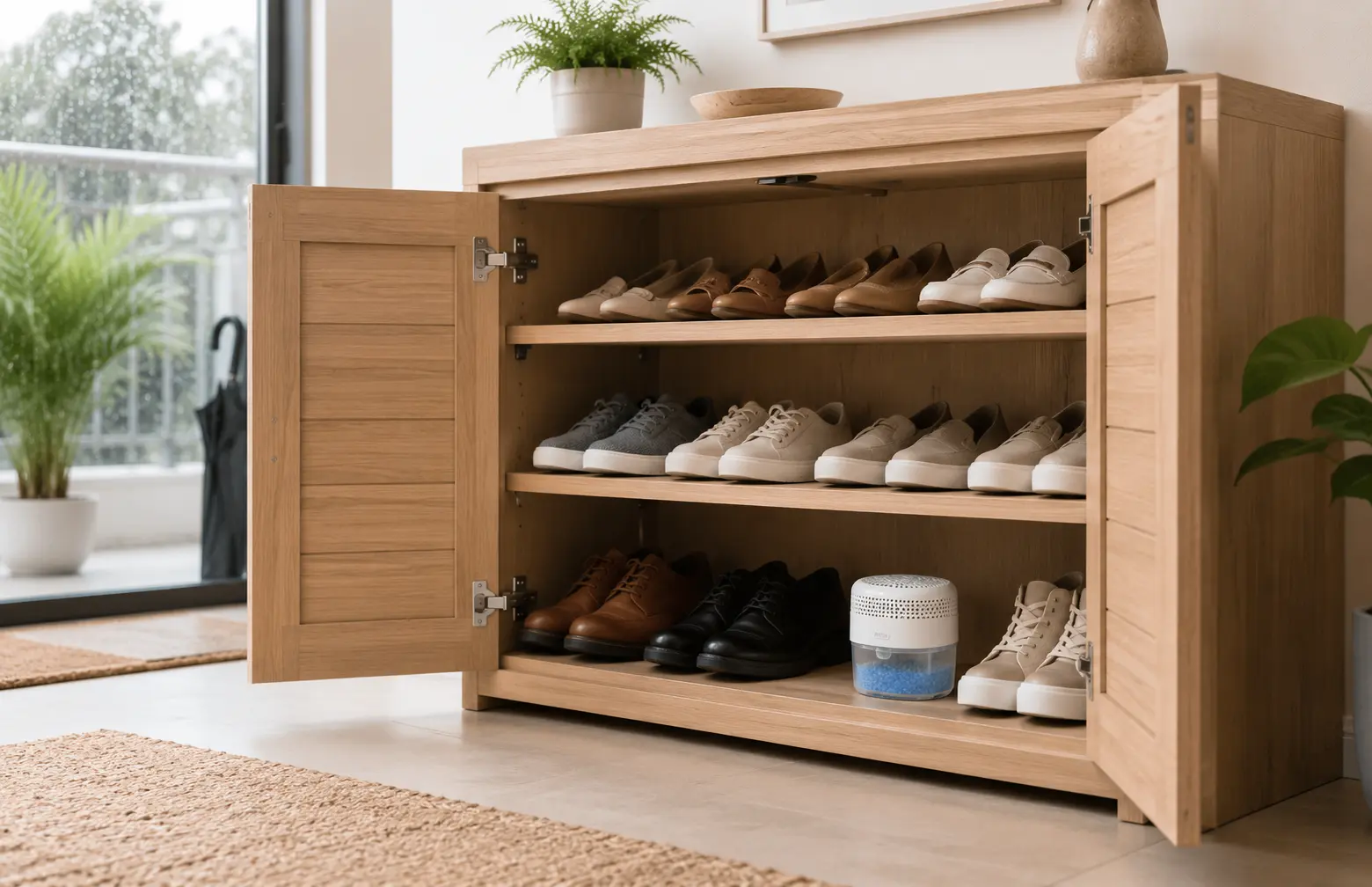
Shoe cabinets are useful for keeping footwear organised, but their enclosed design can also trap moisture. In Singapore’s humid climate, damp shoes, limited airflow and everyday indoor humidity can lead to musty odours, damp interiors and mould growth over time.
A compact shoe cabinet dehumidifier solution helps manage moisture directly inside the cabinet. Unlike larger room dehumidifiers, it is designed for smaller enclosed spaces where targeted humidity control is more practical.
For broader storage needs, our moisture absorbers and disposable dehumidifier range includes solutions for wardrobes, cabinets and enclosed spaces. This guide explains how to keep shoe cabinets dry and choose a suitable option.
Table of Contents
- Why Shoe Cabinets Become Damp in Singapore
- Signs of Excess Moisture Inside a Shoe Cabinet
- How to Choose a Shoe Cabinet Dehumidifier
- Best Ways to Use a Shoe Cabinet Dehumidifier
- Common Mistakes When Managing Shoe Cabinet Moisture
- Practical Moisture Control Solutions for Enclosed Spaces
- Final Thoughts
Why Shoe Cabinets Become Damp in Singapore
Singapore experiences high humidity throughout the year. Even in air-conditioned homes and offices, enclosed storage areas can retain moisture when airflow is limited.
Shoe cabinets face an additional challenge because footwear often brings moisture into the cabinet. This may happen after walking outdoors during wet weather, wearing shoes for long hours, storing sports shoes immediately after use or placing school shoes inside before they are fully dry.
Once moisture enters an enclosed cabinet, it may take longer to disperse than it would in an open room. This is why a shoe cabinet can develop musty smells even when the surrounding room feels dry.
The issue is not always visible immediately. A cabinet can look clean while still holding excess moisture inside. Over time, this may affect footwear, shelving and the overall storage environment.
For homes with wider humidity concerns, our guide on the signs of high humidity in Singapore homes can help identify whether the problem is limited to the shoe cabinet or part of a broader indoor moisture issue.
Signs of Excess Moisture Inside a Shoe Cabinet
Moisture problems are easier to manage when they are identified early. The signs inside a shoe cabinet may start subtly and become more noticeable over time.
Persistent Musty Odours
A musty smell that returns shortly after cleaning may indicate that moisture remains trapped inside the cabinet.
Odours can develop from damp footwear, poor airflow and the materials used in shoes or cabinet construction. Fragrance alone may improve the smell temporarily, but it does not address the underlying moisture problem.
Shoes Feel Slightly Damp
Footwear should not feel moist, cold or unusually soft when removed from storage. Persistent dampness can indicate that moisture is not dispersing properly inside the cabinet.
This is especially relevant for leather, fabric, canvas and sports shoes, which may absorb and retain moisture more easily.
Mould Spots or Damp Surfaces
Small spots on shoes, shelving or internal cabinet surfaces should not be ignored. They may suggest that the cabinet has remained damp for an extended period.
Our guide to preventing mould in Singapore homes explains how moisture management, ventilation and cleaning work together to reduce mould-friendly conditions.
Damp Cabinet Surfaces
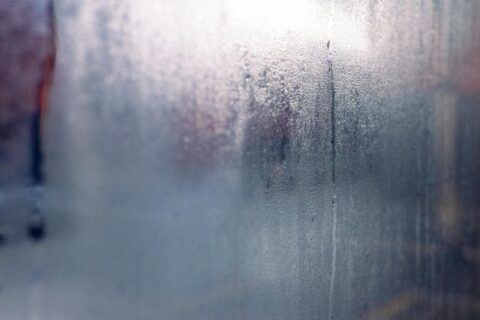
Visible droplets are less common in shoe cabinets than in bathrooms or window areas, but damp internal surfaces can still occur when moisture is repeatedly introduced into a poorly ventilated space.
If similar signs appear in other parts of the home, you may also refer to our guide on the signs of high humidity in Singapore homes to understand whether the issue is limited to the shoe cabinet or part of a wider indoor humidity problem.
How to Choose a Shoe Cabinet Dehumidifier
A suitable shoe cabinet dehumidifier Singapore solution should match the size, layout and usage pattern of the cabinet.
The best option is not necessarily the largest product. Instead, it should be practical for the available space and suitable for enclosed storage.
Cabinet Size and Layout
A compact cabinet storing a few pairs of shoes may only require a small moisture-control product.
Larger built-in cabinets may need more than one unit, especially if the cabinet has separate compartments or shelves that restrict airflow. One dehumidifier placed at the top of a tall cabinet may not provide even coverage throughout the entire space.
Moisture Level
A cabinet used mainly for dry office footwear has different needs from one storing running shoes, school shoes or footwear frequently exposed to rain.
If shoes are regularly damp when they return to storage, the first priority should still be drying them properly before placing them inside the cabinet. A dehumidifier can support better storage conditions, but it should not be used as a substitute for drying visibly wet footwear.
Odour Control
Moisture and odour are related, but they are not the same issue.
A fragrance product may make the cabinet smell better without meaningfully reducing moisture. A dehumidifier or moisture absorber helps control dampness, while an aromatic dehumidifier may also improve enclosed-space odours.
For this reason, some users may search for a shoe cabinet moisture absorber Singapore solution even though the product is functionally used as a compact dehumidifier for enclosed spaces.
Desiccant-Based Moisture Control
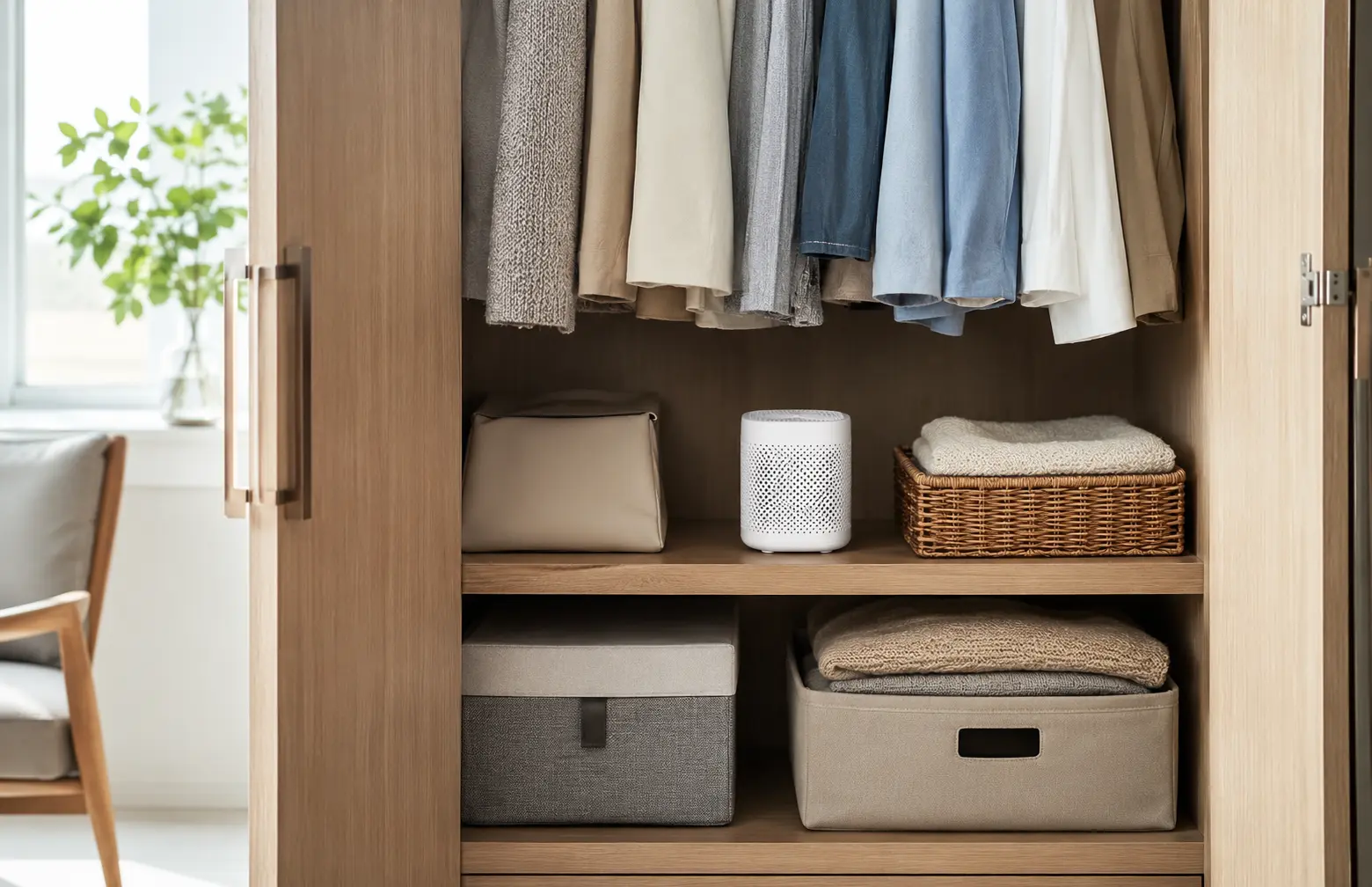
Many compact shoe cabinet dehumidifiers use desiccant materials. These materials attract and retain moisture from the surrounding air, making them suitable for small enclosed spaces such as shoe cabinets, wardrobes, drawers and cupboards.
For a more detailed explanation, our desiccant dehumidifier Singapore guide explains how desiccant-based moisture control works and where it is most appropriate.
Best Ways to Use a Shoe Cabinet Dehumidifier
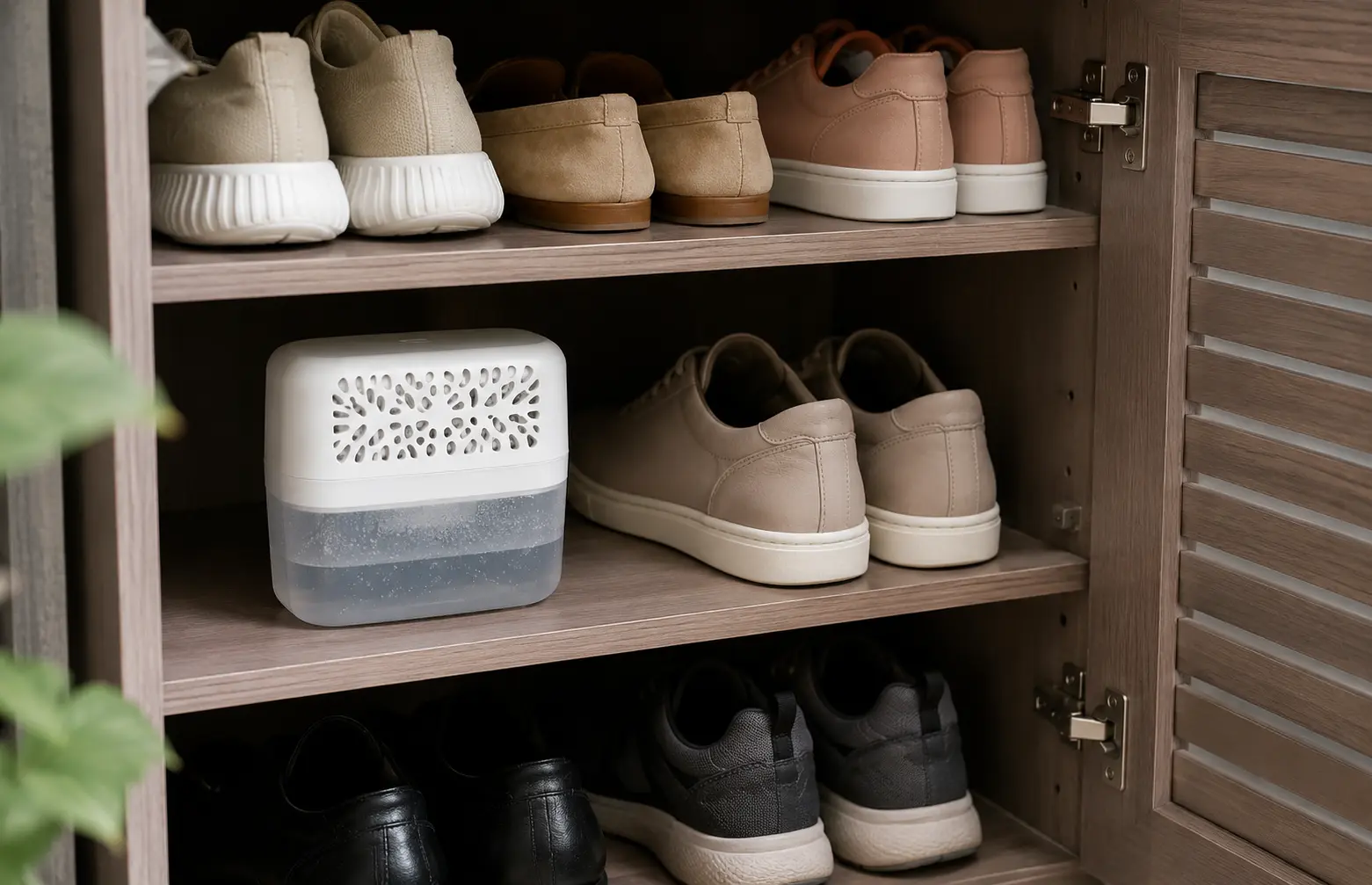
A shoe cabinet dehumidifier works best when it is placed properly and supported by good storage habits.
For small shoe cabinets, one compact unit may be sufficient if it is placed in a stable position with some space around it. Avoid placing it where it can be blocked by shoes, crushed by stored items or knocked over easily.
For larger built-in cabinets, more than one compact unit may be needed. This is especially true when the cabinet has separate compartments, closed shelves or limited airflow between sections.
Shoes exposed to rain, perspiration or outdoor humidity should be allowed to dry before being placed inside the cabinet. Placing wet shoes directly into storage introduces a large amount of moisture into a small enclosed space. This can affect not only the wet pair but also other footwear stored nearby.
To improve effectiveness:
- avoid overpacking the cabinet;
- leave some space between pairs of shoes;
- open the cabinet regularly for air exchange;
- clean cabinet surfaces periodically; and
- check the dehumidifier regularly so it can be replaced when needed.
These habits help support more consistent shoe cabinet humidity control, especially during rainy periods or when the cabinet is used frequently.
For wardrobes and fabric storage, the moisture issues may be slightly different. Our wardrobe dehumidifier Singapore guide explains how enclosed humidity affects clothes, fabrics and wardrobe storage.
Common Mistakes When Managing Shoe Cabinet Moisture
Many shoe cabinet humidity problems continue because the storage routine does not match the actual moisture conditions.
One common mistake is using fragrance as a complete solution. A pleasant smell may temporarily mask mustiness, but persistent dampness still needs to be addressed.
Another mistake is placing one small unit inside a large multi-compartment cabinet and expecting it to cover the entire space evenly. Compact dehumidifiers work best when they are matched to the actual size and layout of the cabinet.
Other common mistakes include:
- storing wet shoes immediately;
- overcrowding the cabinet;
- blocking the dehumidifier with footwear;
- assuming air conditioning will keep every cabinet dry;
- forgetting to check or replace the moisture absorber; and
- using a compact cabinet solution for a room-wide humidity problem.
If moisture problems also appear in bedrooms, wardrobes, walls or storage areas, the issue may be broader than the shoe cabinet itself. In that case, it may be useful to compare targeted cabinet solutions with larger room dehumidifiers. Our guide on refrigerant vs desiccant dehumidifier systems explains the difference between these two approaches.
Practical Moisture Control Solutions for Enclosed Spaces

Moisture control is an ongoing concern for many homes and businesses in Singapore. Enclosed spaces such as wardrobes, shoe cabinets, cupboards and storage compartments can trap humidity even when the surrounding room feels reasonably dry.
At WholesaleSupplies.sg, we support households and organisations with practical humidity-control solutions suited to different environments. If you are exploring suitable options, you may browse our moisture absorbers and disposable dehumidifier range to compare products designed for bedrooms, offices, wardrobes, cabinets and enclosed storage spaces.
For shoe cabinets where both moisture and odour management are important, our aromatic moisture absorber dehumidifier options provide a compact solution for targeted storage use.
Choosing the right product helps avoid using an oversized solution for a small cabinet or expecting a compact absorber to manage the humidity of an entire room.
Final Thoughts
Keeping a shoe cabinet dry requires more than occasional cleaning. In Singapore’s humid climate, enclosed cabinets can trap moisture around footwear, creating conditions that contribute to musty odours, dampness and mould growth over time.
A suitable shoe cabinet dehumidifier Singapore solution can provide targeted moisture control without requiring a large room dehumidifier. The most appropriate option depends on cabinet size, ventilation and how frequently wet or damp shoes are stored inside.
If you are unsure which moisture control solution is suitable for your shoe cabinet or other enclosed storage spaces, feel free to contact WholesaleSupplies.sg via WhatsApp for recommendations based on your specific requirements.